Trending

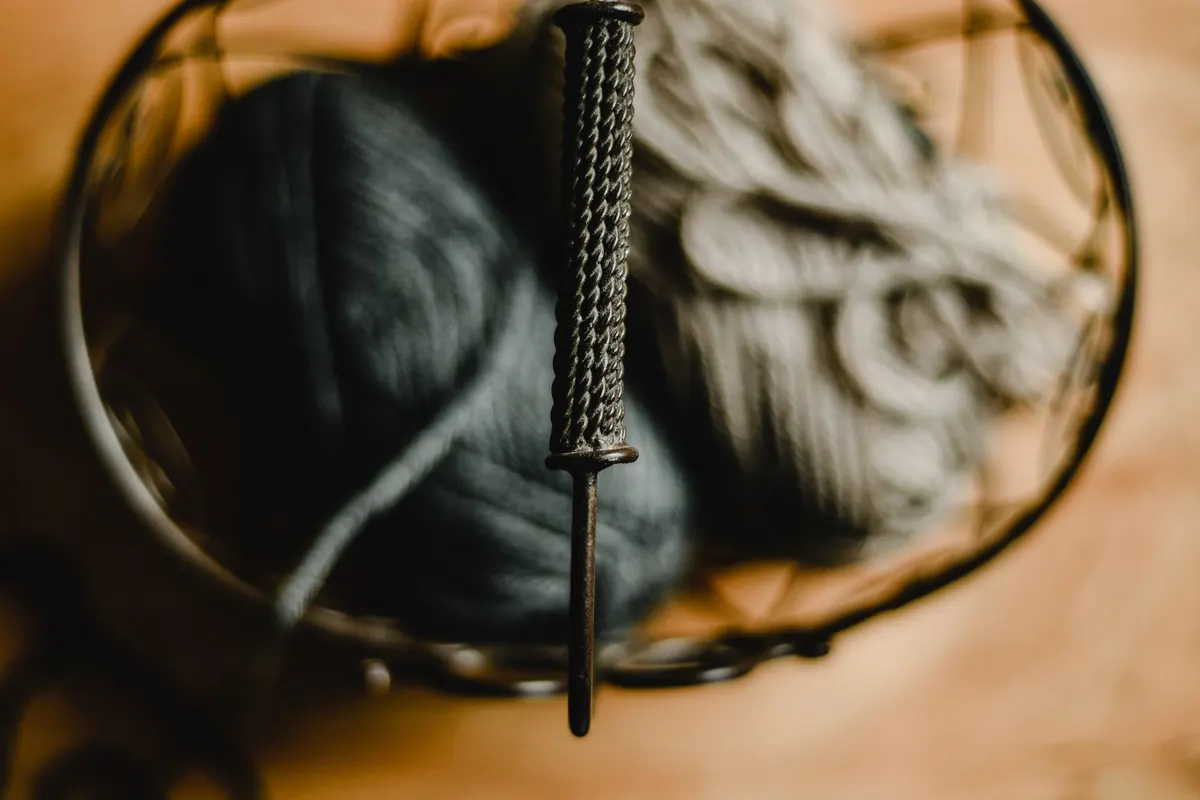
The pattern calls for a yarn you can't find, can't afford, or simply don't love. So you pull a different skein from the shelf and hope for the best. Sometimes that works beautifully. Sometimes you finish a sweater that fits like a paper bag and you can't quite say why. Swapping yarn doesn't have to be a gamble, though. Check four things before you cast on — gauge, fiber, drape and yardage — and the substitute often turns out better than the original: softer, cheaper, easier to wash, or finally the colour you actually wanted.
The ball band gives you a starting number: something like 22 stitches and 30 rows to 10 cm in stocking stitch on 4 mm needles. Hold it next to the pattern's gauge and see how close they sit. If the two are within a stitch or two, the yarns belong to roughly the same weight family and the conversation can continue. If they are four stitches apart, no needle change will fix it. You are looking at a different yarn weight, and you should either find another substitute or choose a pattern written for that weight.
It helps to see what a small difference actually costs. Suppose a sweater is knitted at 20 stitches per 10 cm and the finished chest measures 100 cm, so you cast on 200 stitches. Knit those same 200 stitches at 21 per 10 cm and the chest comes out at about 95 cm. Five centimetres is the difference between comfortable and unwearable for many people. That is why "close enough" is a risky phrase in garment knitting.
For knitwear, treat stitch gauge as the priority and row gauge as negotiable — most patterns let you work extra or fewer rows to reach a length. Raglan and set-in sleeve shaping are the exception, because the armhole depth is built into a fixed row count. If your row gauge is far off in a yoked sweater, the shoulders will sit in the wrong place no matter how carefully you swatch. Lace and cable patterns complicate things further: they pull the fabric in, so a yarn that matches in stocking stitch may not match under a cable panel.
Two yarns can share a gauge and behave nothing alike. How the fiber is spun and plied changes stitch definition, weight and how the fabric ages.
If you're swapping a smooth worsted-spun yarn for a floofy woollen one in a cabled aran, expect the cables to look like suggestions rather than statements. The gauge may match perfectly; the fabric still won't be what the designer intended.
Drape is how a fabric falls — fluid and swingy, or structured and firm. It's the quality that most often gets ignored during a substitution and most often ruins the fit.
Wool is springy and elastic. It holds shape, recovers at the ribbing and forgives a slightly tighter fit. Cotton is heavier and far less elastic; a cotton version of a wool sweater will hang longer and wider by the end of the day, especially at the hem, and the ribbing will look tired sooner. Alpaca drapes beautifully and grows noticeably under its own weight, which is charming in a shawl and less charming in a close-fitting top. Linen is stiff at first and softens with every wash. Silk adds weight and shine. Acrylic is light and hard-wearing but can feel clammy and has little memory.
Small percentages matter too. Ten or fifteen percent of nylon transforms a soft sock yarn into something that survives a winter of wear. A touch of silk changes how a blend catches the light. Read the full composition, not just the headline fiber.
One more thought before you commit: an inelastic fiber in a pattern designed with negative ease — a fitted beanie, a close raglan, ribbed cuffs — will fight you. The garment may fit perfectly when you block it and sag by the second wearing.
Grams tell you how much the skein weighs. Meters tell you how far it goes. A heavy cotton and an airy wool can both weigh 100 g, but one might carry 180 m and the other 240 m. Patterns list yarn requirements in meters or yards because that's the number that determines whether you run out.
That last point isn't fussiness. Dye lots differ, and running short two years later is a genuine problem. If you're working a gradient or alternating skeins to blend colour, plan for the extra.
A swatch straight off the needles is only half a swatch. Knit one at least 15 cm square — bigger if the stitch pattern is complex — and work it in the same technique as the pattern. Stocking stitch flat and stocking stitch in the round can differ in gauge by a stitch or more, so if the body is worked in the round, swatch in the round.
Then wash it exactly as you'd wash the finished piece, dry it flat, and leave it for a day. Heavy fibers keep stretching. Measure again after that rest, because the gauge you want is the gauge the garment will have after a month of wearing, not the one it had on the blocking mat.
If stitch count and row count won't both cooperate, match the stitch count and adjust length as you go. If neither will come close, or the swatch feels stiff, thin or lifeless compared with what the pattern describes, stop. Changing the yarn is one decision; changing the whole fabric is another, and not every pattern survives it.
Five minutes with a notebook saves hours of ripping back. Write down the pattern's gauge, then your substitute's gauge on the needles you'd realistically use. Note the fiber content of both and ask whether the new one is springier or heavier. Estimate total yardage with the ten percent buffer. Work one honest swatch, wash it, and measure it twice.
If all four answers line up, buy with confidence and enjoy the substitution — plenty of well-loved garments are knitted in a yarn the designer never touched. If one answer is a long way off, ask yourself which is easier to change: the pattern you knit, or the yarn you knit it with.
Photo: Eva Bronzini / Pexels