Trending

Cold weather is kind to knitters. Wool behaves, patterns stay simple, and a hat cast on during a Sunday film can be blocking on the radiator by bedtime. The trouble starts when you promise four scarves in early November and remember, halfway through the second, that you also have a job.
The five projects below are chosen for speed without looking like speed. Each one leans on thick yarn, straightforward shaping, or both, so the finished thing reads as generous rather than rushed. Every entry comes with a working time estimate for an average knitter putting in evening sessions of an hour or so.
The numbers below are estimates, not promises. They assume a few things, and it is worth checking that those assumptions match your own knitting before you build a gift list around them.
Add a buffer of twenty to thirty per cent for gifts. Something always happens — a dropped stitch found three inches later, a skein that runs short, a recipient who asks for cables. If a gift has a date attached, work backwards from it and subtract a full week. That last week is for blocking and for the evenings when you would rather not knit at all.
A gift knit finished in a panic is still a gift knit. It just isn't much fun to make.
The fastest hat is the one knit in the round on big needles in a simple two-by-two rib. In a bulky weight on 6.5mm or 7mm circulars, most adult sizes need somewhere between 64 and 80 stitches. Work the rib for six or seven inches, switch to stocking stitch for the crown, and decrease four times over a handful of rounds until about sixteen stitches remain. Thread the tail through, pull tight, and you are done.
Keep a DPN or a long cable handy for the crown, when the stitch count drops and the circular gets awkward. Choose a yarn with a little twist so the rib holds its shape after washing. Skip the pompom if the recipient is a hat-in-a-coat-pocket person; add one if the hat is the gift.
Mitts are the gift people actually wear. They keep a phone-holding hand warm on a cold walk, they fit almost anyone, and they use so little yarn that a single skein of DK often covers two pairs.
A plain pair in DK on 3.5mm needles, knit in the round, is around forty stitches at the wrist. Work two inches of rib, then stockinette to the base of the thumb, a few inches of straight tube, and a ribbed cast-off. A thumb gusset adds roughly forty minutes to the pair and improves the fit noticeably, so it usually earns its place.
Knit both mitts at once on two circular needles, or on one long cable with two balls of yarn. It feels slow for the first hour and then it doesn't, and you never end up with a finished left mitt and a single cuff in a bag.
A scarf that stays put is a better gift than a long scarf that doesn't. The keyhole version, sometimes called a buttoned neck warmer, is a short flat panel in rib with a gap worked halfway along, so one end threads through the other. No buttons, no buttonholes, no fit issues.
In a bulky yarn on 8mm needles, cast on about thirty stitches, work three-by-three rib for roughly thirty inches, and at the halfway point cast off a few stitches and cast them on again on the next row. Block it lightly so the rib opens. Two skeins, sometimes less.
These take longer than a hat, and they are worth it. A worsted-weight sock knit at a generous gauge works up quickly and can be worn over bare feet or a thin pair of everyday socks.
To make them last, hold a strand of reinforcing yarn along the heel and sole, or knit the sole in a denser stitch. Two hours of the estimate usually go into the second sock, which is why the pair is worth treating as one project rather than two.
The one-size gift. A simple triangle in garter stitch, worked from one point with an increase at the start of every other row, needs no measurements and fits everyone. In a bulky yarn on 10mm needles, a wrap that finishes around sixty inches across the top takes roughly 300 to 400 grams and about eight hours of knitting.
Keep it plain, or add stripes from leftover skeins in the same weight. Cast off loosely, because a stretchy bind-off matters here, and block gently so the point sits flat. This is the project to pick for the person on your list who doesn't wear hats.
Write the list, attach a project to each name, then attach hours. A beanie and two pairs of mitts is around twelve hours of knitting, which is two weeks of evenings for most people. Be honest about that number before you commit to it.
Knit the small things first. A hat finished in early October gives you the morale to start slipper socks
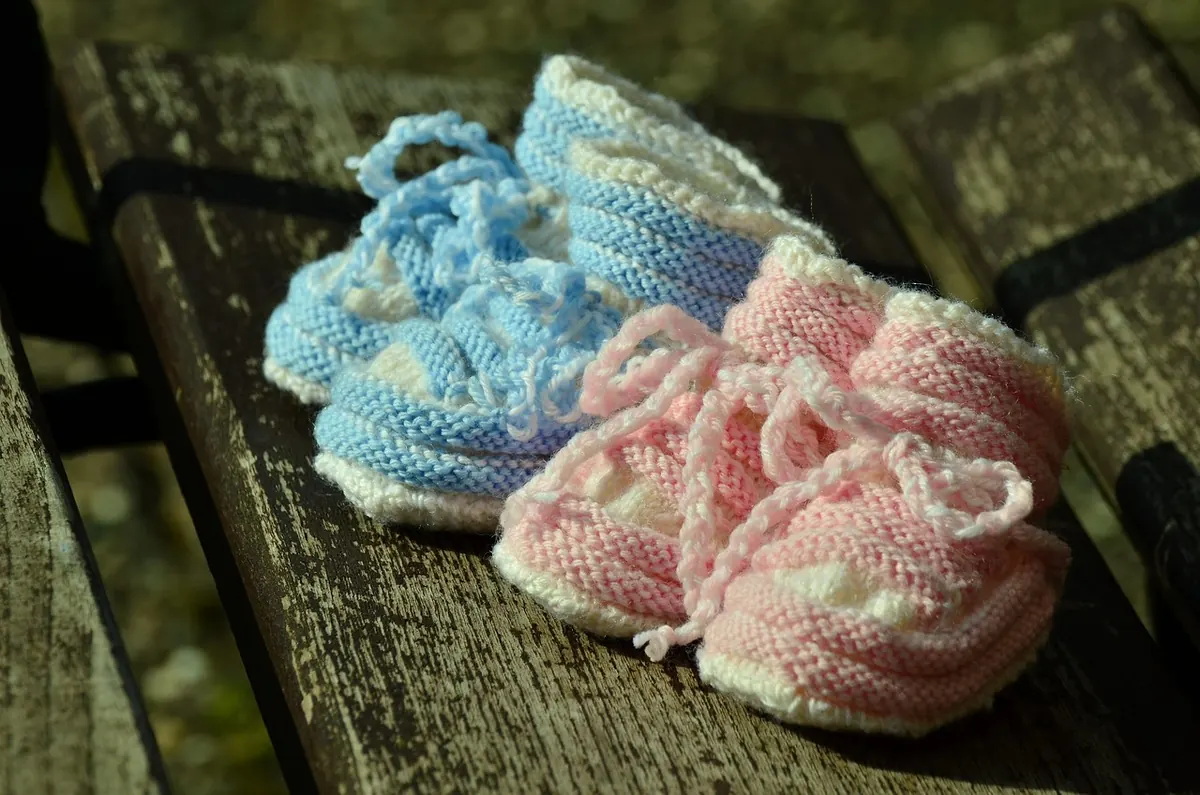
Photo: congerdesign / Pixabay